


Gas Furnaces in Gaithersburg, MD & Washington, DC
A gas furnace should do more than produce heat. It should be sized correctly, move air evenly through the house, use fuel efficiently, and respond predictably when winter temperatures drop. James A. Wheat & Sons, Inc helps homeowners compare gas furnaces in Gaithersburg, MD & DC with equipment selection based on the home, existing ductwork, heating load, comfort goals, and long-term operating costs.
As a family owned and operated Carrier Factory Authorized Dealer with more than three decades of experience, we provide furnace installation and furnace replacement with high-efficiency gas furnaces, along with repair and maintenance for any furnace brand, whether or not we installed it.
Call (301) 241-9636 or contact us online to compare gas furnace options for your Gaithersburg or Washington, DC home.
Have an Emergency?
We Can Help!
The Right Gas Furnace Starts With the House, Not the Model Number
A furnace that is too large can satisfy the thermostat quickly while leaving temperature differences between rooms and creating short operating cycles. A system that is too small may run for long periods and struggle during colder weather. Furnace selection should account for home size, insulation, air leakage, duct capacity, window area, and how the house actually holds heat.
Older homes across Montgomery County and Washington, DC can add another layer to that decision. Existing ductwork may have been designed around equipment from a different era, and renovations or additions can change the original heating load. That is why our furnace installation process starts with the home rather than simply matching the capacity of the furnace being removed.
How Gas Furnace Efficiency Is Measured
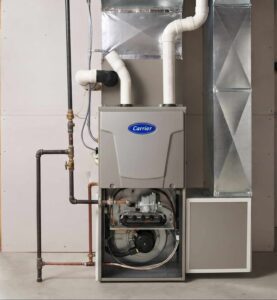
Gas furnace efficiency is expressed as AFUE, or Annual Fuel Utilization Efficiency. The rating estimates how much of the fuel consumed by the furnace is converted into usable heat over a typical heating season. A higher AFUE rating means less of that fuel is lost through the venting process.
Efficiency still depends on more than the furnace label. Duct leakage, airflow restrictions, thermostat setup, maintenance, and incorrect sizing can all keep a high-efficiency unit from operating the way it was designed to. Equipment selection and installation quality need to work together.
Gas Furnace Options for Different Comfort Goals
Carrier manufactures gas furnaces across several performance levels, giving homeowners options based on budget, efficiency, sound, and temperature control. As a Carrier Factory Authorized Dealer, we can explain how those differences affect day-to-day operation instead of reducing the decision to a single efficiency number. The right configuration depends on the house, duct system, comfort expectations, and how much control you want over heating performance, and common gas furnace configurations include:
- Single-stage gas furnaces: Operate at full heating output whenever the furnace runs, making them a simpler option for straightforward heating needs.
- Two-stage gas furnaces: Use a lower heating stage during milder conditions and higher output when demand increases, which can improve temperature consistency.
- Variable-speed furnaces: Adjust blower output to match heating demand more closely and can improve airflow, sound levels, and comfort across the home.
- High-efficiency gas furnaces: Use advanced heat-exchange and venting designs to capture more usable heat from the fuel consumed.
- Hybrid heating systems: Pair a gas furnace with a heat pump so the system can switch between electric and gas heat based on operating conditions.
What Happens During a Gas Furnace Installation
Before installation begins, we review the existing system, ductwork, venting, controls, and available space. Once the equipment is selected, the project can include removal of the old furnace, preparation of the installation area, connection of gas and electrical components, thermostat setup, and integration with the existing cooling system where applicable.
After installation, the furnace is tested through a full operating cycle. Airflow, temperature rise, thermostat response, safety controls, and combustion-related operation are checked before the system is turned over. Straightforward pricing is reviewed before approved work begins so the project scope is clear from the start.
Gas Furnace Replacement vs. Repair
A furnace repair still makes sense when the equipment is otherwise in good condition and the failed component can restore dependable operation. Age becomes more meaningful when it arrives with repeated service calls, rising fuel use, uneven heating, longer run times, or major component wear.
Our furnace repair and furnace replacement services allow us to compare both paths based on the actual condition of the system. The goal is to determine whether another repair extends useful service life or simply delays a replacement that is already becoming more practical. When a furnace stops working in cold weather, same-day service is available.
Gas Furnace Questions for Gaithersburg & DC Homeowners
What size gas furnace does my home need?
Furnace size should be based on the heating load of the home, not square footage alone. Insulation, air leakage, windows, ductwork, construction type, and exposure all affect how much heating capacity the system needs.
Is a higher-efficiency furnace always worth buying?
Not automatically. Higher efficiency can reduce fuel use, but the value depends on the home’s heating demand, existing venting, installation requirements, equipment cost, and how long you expect to stay in the property.
Can I replace an older furnace without replacing my air conditioner?
In many homes, yes. Compatibility between the new furnace, existing evaporator coil, blower requirements, controls, and cooling equipment should be checked before keeping part of the old system in place.
How long do gas furnaces usually last?
Many gas furnaces operate for 15 to 20 years with regular furnace maintenance, though actual service life depends on installation quality, operating hours, maintenance history, and component condition.
What signs suggest my furnace is nearing replacement?
Repeated repairs, higher heating costs, uneven temperatures, long run times, unusual noise, frequent cycling, declining airflow, major component deterioration, or a furnace more than 10 years old can all point toward replacement becoming more practical than continued repair.
Annual Maintenance Protects the Furnace After Installation
A new furnace still needs regular cleaning, testing, and adjustment. Annual heating maintenance gives a technician the chance to inspect burners, electrical components, airflow, safety controls, combustion, and other operating conditions before winter demand increases.
Homeowners who prefer to keep seasonal HVAC service on a set schedule can also join the Eagle Club. That program helps keep heating and cooling maintenance from being delayed until a problem appears.
Carrier Training Backs the Equipment We Install
Gas furnace performance depends heavily on installation and commissioning, which is why manufacturer training matters. Our Carrier Factory Authorized Dealer status reflects specific standards around technical training, installation practices, and customer service, and our technicians continue training weekly on diagnostics, equipment updates, and safety procedures.
James A. Wheat & Sons, Inc also received the 2026 Carrier President’s Award and remains active with the Association of Air Conditioning Professionals. That technical involvement gives homeowners access to a team that works with current furnace technology while still carrying decades of experience with the older systems found throughout the region. We hold Maryland HVAC (4178), Maryland Plumb/Gas (67726), WSSC Plumb/Gas (70805), DC HVAC (LC900099), and DC Plumb/Gas (PC798) licenses, along with Maryland Home Improvement license 14762.
Gas Furnaces Across Gaithersburg, Montgomery County & Washington, DC
Homes across Gaithersburg, Rockville, Bethesda, Potomac, and Washington, DC span several construction eras, and the furnace setup often reflects that history. Older properties within our service area may have smaller mechanical spaces, aging duct systems, or venting designed around older equipment, while newer homes may be better suited to staged or variable-speed systems.
That variation is why furnace selection should stay property-specific. We look at the equipment already in place, the way the home heats now, and the conditions that could limit the performance of the next system.
Choose the Furnace Around How the Home Actually Heats
A gas furnace is a long-term part of the home’s comfort system, and the best choice is rarely the one with the largest capacity or highest rating on paper. James A. Wheat & Sons, Inc helps homeowners compare efficiency, staging, airflow, sizing, controls, and installation requirements so the new furnace fits the house rather than forcing the house to work around the equipment.
A properly selected and installed furnace should give you predictable heat, better control, and a clearer path for maintenance and future service.
Call (301) 241-9636 or schedule a gas furnace consultation online for your Gaithersburg, MD or Washington, DC home.

What Can We Do For You?
Contact Us Today!
Homepage Footer


We Treat You Like Family
Let us ensure that you have the highest degree of home comfort and become part of the James A. Wheat & Sons family.
- Same Day Service
- Lifetime Warranties
- Free Service Calls
- Trained Technicians
- Friends & Family Discounts
- And Much More!