


Gas Fireplace Installation in Gaithersburg, MD & Washington, DC
A gas fireplace installation is not a smaller version of a repair or a maintenance visit, it is the point where every downstream service depends on getting the plan right the first time: venting type, clearance to combustibles, gas line sizing, and appliance selection all get locked in before anything is cut into a wall. James A. Wheat & Sons, Inc performs gas fireplace installation in Gaithersburg, MD & DC using the same technicians who handle the gas piping, the venting, and the appliance itself, rather than splitting the job across a fireplace dealer and a separate plumber.
That matters most on the two installation types that come up most often: a brand new gas fireplace in a home that never had one, and a masonry chimney conversion in an older home where the existing structure has to be evaluated before anything gets installed.
Call (301) 241-9636 or contact us online to start planning your installation.
What Gets Decided Before Anything Is Installed
Every installation starts with the space, not the appliance. A technician evaluates the planned location, the venting path available, and what the gas supply can support before recommending a specific unit, so the appliance gets chosen to fit the home instead of the home getting adapted to fit whatever unit was easiest to sell.
That evaluation covers:
- Venting type and path: confirm whether a direct-vent, b-vent, or vent-free unit fits the space, and map the actual vent run through the wall, ceiling, or existing chimney.
- Clearance to combustibles: measure required clearance from the appliance to framing, mantels, and nearby materials against manufacturer specs and local code.
- Gas line sizing and routing: size the gas line for the selected appliance’s BTU demand and plan the routing from the existing supply, extending or upsizing the line where the current setup cannot support it.
- Masonry chimney evaluation (conversion projects): inspect flue condition, damper function, and structural soundness before recommending a vented insert or log set for an existing wood-burning fireplace.
- Appliance and fuel selection: match the unit type, natural gas or propane, to what is already run to the home or what a new line installation would require.
- Permit and code review: confirm what the jurisdiction requires for gas line work and appliance installation before scheduling the job, since Maryland and DC permitting requirements differ by jurisdiction and by whether the work involves new gas piping.
Vented, Vent-Free, and Direct-Vent: Why the Distinction Matters
Not every gas fireplace vents the same way, and the difference changes both what a home qualifies for and how the unit performs long-term.
- Direct-vent units pull combustion air from outside and exhaust directly outside through a sealed pipe, which makes them the most flexible option for homes without an existing chimney since the vent run can go through an exterior wall or the roof.
- B-vent (natural-vent): B-vent fireplaces vent vertically like a traditional chimney and work well in a masonry conversion where the existing flue is sound, but they are less common in new installations without an existing vertical path.
- Vent-free units burn without any exterior venting at all, which simplifies installation but requires a working glass or gasket seal and adequate room ventilation, since any breakdown in that seal allows combustion byproducts into the living space.
Choosing the right one is a venting-path and home-layout decision first, not a style decision, which is why that call gets made during the initial evaluation rather than left to appliance preference alone.
Installation Versus Conversion: Two Different Starting Points
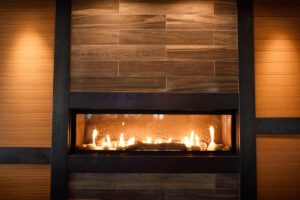
New installation in a home with no existing fireplace: the vent path and gas line typically need to be built from scratch, which gives more flexibility in appliance placement but requires more planning around where a direct-vent line can run through an exterior wall or up through the structure.
Masonry chimney conversion: an existing wood-burning fireplace already has a flue, but that flue has to be evaluated for condition and proper draft before a vented insert or log set can be installed into it. Many older masonry chimneys throughout DC and Montgomery County can accept a conversion, but flue liner condition and clearance inside the firebox determine what will actually fit and function safely.
Both paths end at the same standard: correct venting, verified clearance, and a combustion test confirming the appliance is drafting and burning properly before the job is called finished.
What a Gas Fireplace Installation Typically Costs
Installation cost depends on three factors more than any other: whether a chimney conversion or a from-scratch install is involved, how far the gas line has to run, and which appliance tier is selected, insert, log set, or full built-in unit. A straightforward log set conversion into an existing, sound flue generally costs less than a direct-vent built-in unit requiring new gas line routing through finished walls.
The most accurate number comes from an in-home evaluation, since gas line distance and wall or chimney access are the two variables that move the estimate the most. Ask about current financing options when scheduling, since new installations often qualify.
Gas Fireplace Installation Options We Install
- Gas fireplace inserts: vented inserts designed to fit into an existing masonry firebox, converting a wood-burning fireplace to gas without removing the surrounding structure.
- Gas log sets: a lower-cost conversion option for an existing fireplace that keeps more of the traditional look while switching the fuel source to gas.
- Built-in gas fireplaces: factory-built direct-vent units installed into new framing where no fireplace previously existed, common in additions and homes without an existing chimney.
- Gas line installation: new line runs or capacity upgrades sized to the selected appliance, completed by the same technicians handling the fireplace installation itself.
Installation Questions Homeowners Ask Before Scheduling
Can I install a gas fireplace in a home that has never had one?
In most cases, yes. A direct-vent unit does not require an existing chimney, since it vents through an exterior wall or the roof rather than a traditional flue, which makes it the most common choice for homes without one.
Do I need a permit to install a gas fireplace in Maryland or DC?
Generally yes, particularly when the work involves new or modified gas piping. Requirements vary by jurisdiction, which is why permit review happens during the initial evaluation rather than after the appliance is already selected.
Can my old masonry fireplace be converted instead of removed?
Often, yes. The flue has to be evaluated for condition and draft first, but many masonry fireplaces in older Gaithersburg and DC homes are good candidates for a vented insert or log set conversion rather than a full removal and rebuild.
How long does a gas fireplace installation take?
A straightforward log set or insert conversion into an existing flue is typically completed in a single day. A built-in unit requiring new gas line routing or framing work takes longer, depending on how far the line has to run and how much wall access is involved.
What is the difference between a vented and a vent-free gas fireplace?
A vented unit exhausts combustion byproducts outside through a direct-vent or b-vent system, while a vent-free unit burns without exterior venting and relies on a sealed glass or gasket front and adequate room ventilation instead.
Housing Age Across the Region Shapes the Installation
Older homes throughout Chevy Chase, Potomac, and DC row home neighborhoods like Dupont Circle and Georgetown frequently have existing masonry chimneys, which makes flue evaluation and insert or log set conversion the more common project. Newer construction in areas like North Potomac and parts of Rockville often has no existing chimney at all, which shifts the project toward a direct-vent built-in unit with a new gas line run planned from scratch. West Bethesda carries a mix of both, older wood-burning conversions alongside more recent builds already set up for a direct-vent install, so each evaluation gets scoped to what the home was actually built with rather than a standard approach applied everywhere.
Family-Owned Since 1978, Still Handling the Gas Work Directly
James A. Wheat & Sons, Inc has operated as a family-owned, locally operated business throughout Montgomery County, Maryland, and Washington, DC since 1978, spanning two generations of ownership. That history includes gas piping work done as part of the company’s plumbing and HVAC operations, which is why the technicians planning a fireplace installation are the same ones qualified to size and run the gas line feeding it, rather than a fireplace-only installer subcontracting that piece out.
Technicians train continually on gas appliance installation, current venting standards, and code requirements, which is part of what shapes an accurate first-time installation instead of a callback to correct something missed during planning.
Contact Us Today to Get Started on Your Gas Fireplace Installation
A gas fireplace installation goes right when the venting path, gas line capacity, and appliance choice are all confirmed before installation day, not adjusted after something does not fit. James A. Wheat & Sons, Inc built its installation process around that evaluation, whether the project is a brand-new built-in unit or a conversion of a masonry fireplace that has not been used in years.
Call (301) 241-9636 or request your free gas fireplace installation estimate online today.

What To Expect
Discover the Difference
Satisfaction Guaranteed
We stand behind every job we perform, because that’s what it means to be family. Your complete satisfaction is our guarantee.
Upfront
Pricing
You’ll never be stuck with an unexpected bill when your services are complete. We offer upfront, no-surprise pricing, so you can rest assured you’re only paying for the high-quality work you receive.
Trained
Technicians
Our secret to offering the best service in the business is simple. We hire quality people and continually train them to provide the best customer experience possible. We train weekly on service, equipment, diagnosis, and more. You can rest assured that our technicians will bring the industry expertise necessary to exceed your expectations.
Extended
Warranties
We work continuously to keep up with recalls, extended warranties, and notices regarding all plumbing, heating, and AC equipment that we may come in contact with in your home.
Commitment
to Community
We believe that as we grow, so should our community—that’s why we look for every opportunity possible to give back.
Special
Financing
We understand the financial strain that often accompanies new system installation, home remodeling, or unexpected service calls. That’s why we offer special financing to keep your household budget intact. Financing is subject to approved credit